What Should You Consider When Choosing Flooring for a Multi-Tenant Commercial Building in Omaha?
Choosing flooring for a multi-tenant commercial building involves more than selecting an attractive material. Different businesses use their spaces in different ways, and the flooring must handle varying levels of foot traffic, furniture movement, cleaning routines, and everyday wear. A property with professional offices, retail units, shared hallways, and common waiting areas needs a flooring strategy that works across all these environments.
For property owners and managers in Omaha, Nebraska, making the right flooring decision can improve the appearance, functionality, and long-term condition of a commercial property. The local climate also deserves consideration because snow, rain, mud, and moisture can enter buildings throughout the year.
Working with an experienced commercial flooring and interior finish contractor Omaha NE can help property owners evaluate different materials, understand installation requirements, and coordinate flooring with other interior improvements.
Before choosing a flooring material, it is important to understand how each area will be used, what maintenance it requires, and whether it can support the needs of multiple tenants.
Why Flooring Selection Matters in Multi-Tenant Commercial Buildings in Omaha
Multi-tenant buildings are different from single-business properties because several companies may operate under one roof. Each tenant can have different expectations regarding appearance, comfort, durability, and maintenance.
For example, a professional office may prefer a quiet and comfortable floor, while a retail business may need a hard surface that can handle frequent customer movement. Shared hallways and entrances require materials that can withstand continuous traffic.
A well-planned flooring decision can help property owners:
- Maintain a professional appearance throughout the building.
- Reduce damage caused by regular foot traffic.
- Improve cleaning and maintenance efficiency.
- Create comfortable working environments.
- Support different tenant requirements.
- Reduce the frequency of unnecessary flooring repairs.
- Maintain consistency between common areas and individual units.
An experienced commercial flooring and interior finish contractor Omaha NE can assess the building layout and help determine which flooring solutions are appropriate for different spaces.
1. Understand the Purpose of Each Commercial Space
The first step is identifying how tenants will use their individual units and shared spaces. Choosing one flooring material for the entire building may seem convenient, but it is not always the most practical approach.
Different areas have different performance requirements.
Office Spaces and Professional Workplaces
Offices usually experience consistent foot traffic, rolling chairs, desks, and occasional furniture movement. Flooring should provide a comfortable working environment while maintaining a professional appearance.
Carpet tiles, luxury vinyl tile, and commercial-grade resilient flooring are common options.
Carpet tiles can help reduce noise and create a comfortable atmosphere. Luxury vinyl can provide a clean, modern appearance with relatively straightforward maintenance.
Property managers planning Office flooring installation Omaha NE should consider acoustic performance, chair movement, cleaning requirements, and the expected number of employees.
Retail and Customer-Facing Units
Retail spaces often experience more direct customer movement, shopping carts, displays, and occasional spills.
The flooring should be durable, easy to clean, and visually appropriate for the business.
Commercial-grade luxury vinyl, porcelain tile, and other suitable hard-surface materials may work well, depending on the property's requirements.
Shared Hallways and Reception Areas
Common areas create the first impression for visitors and prospective tenants.
These spaces should have flooring that can withstand repeated use without becoming difficult to maintain. Property owners should also consider slip resistance, transitions between materials, and the appearance of the entire interior.
2. Evaluate Durability and Expected Foot Traffic
Durability should be one of the most important considerations when selecting flooring for a multi-tenant property.
A building with several occupied units may experience hundreds of daily visitors. Over time, repeated movement can cause scratches, surface deterioration, stains, and damage around entrances.
Before selecting a product, consider:
- How many people enter the building daily?
- Will tenants regularly move heavy furniture?
- Are rolling office chairs used throughout the property?
- Will deliveries and equipment move through hallways?
- Are there areas where spills are likely?
- How frequently will the flooring need professional cleaning?
A reliable commercial flooring and interior finish contractor Omaha NE can help evaluate these conditions before recommending suitable materials.
Durability does not always mean choosing the hardest available surface. It means selecting a product designed for the actual activities taking place in each area.
3. Consider Omaha's Weather and Seasonal Moisture
Omaha experiences changing weather conditions throughout the year. Winter snow, rain, melting ice, and muddy footwear can introduce moisture and dirt into commercial buildings.
This is particularly important around entrances, reception areas, and shared corridors.
Flooring near building entrances should be selected with moisture exposure, cleaning requirements, and slip resistance in mind.
Property managers should consider:
Moisture Resistance: Materials should be appropriate for the amount of moisture expected in each area.
Slip Resistance: Surface characteristics matter, especially where visitors may track in rain or melting snow.
Entrance Protection: Commercial entry mats can help reduce the amount of dirt and moisture reaching interior flooring.
Easy Cleaning: Flooring that can be cleaned efficiently helps maintain a professional environment during demanding weather conditions.
A knowledgeable commercial flooring and interior finish contractor Omaha NE can help identify suitable flooring options for different parts of the property.
4. Compare Different Commercial Flooring Materials
Every flooring material has advantages and limitations. Property owners should compare performance, maintenance, appearance, and suitability before making a final decision.
Luxury Vinyl Tile and Plank
Luxury vinyl is a popular option for commercial interiors because it offers different designs, textures, and finishes.
It can replicate the appearance of natural wood or stone while providing a practical surface for many commercial environments.
Potential benefits include:
- Multiple design options.
- Relatively easy routine cleaning.
- Resistance to everyday moisture, depending on the product.
- Suitable options for offices and retail environments.
- Individual plank or tile replacement for certain systems.
However, the subfloor must be properly prepared, and the selected product should be suitable for its intended commercial application.
Commercial Carpet Tiles
Carpet tiles can be a practical solution for offices, conference rooms, and selected shared spaces.
They offer several advantages:
- Improved sound absorption.
- Comfortable walking surfaces.
- Different patterns and design combinations.
- Individual tile replacement when localized damage occurs.
Property owners should evaluate stain resistance, cleaning requirements, and suitability for the expected foot traffic.
Porcelain and Ceramic Tiles
Porcelain and ceramic tiles are commonly considered for entrances, corridors, restrooms, and other areas where hard surfaces are preferred.
They offer a wide selection of designs and can provide a durable finished surface when properly installed.
However, grout maintenance, installation preparation, and slip resistance should be evaluated carefully.
Polished Concrete
Polished concrete can create a modern appearance in selected commercial buildings.
It may be appropriate for certain retail, industrial-style office, and common areas.
Its suitability depends on the condition of the existing concrete, moisture conditions, surface preparation, and the desired finish.
5. Plan Flooring Around Different Tenant Requirements
One of the biggest challenges in multi-tenant commercial properties is accommodating businesses with different operational needs.
A medical office, accounting firm, retail store, and professional service company may all require different flooring characteristics.
For this reason, property managers should avoid making decisions based only on visual consistency.
Instead, establish a flooring plan that considers:
- Tenant business activities.
- Employee and customer movement.
- Furniture and equipment requirements.
- Cleaning schedules.
- Noise reduction.
- Accessibility requirements.
- Future tenant changes.
A professional commercial flooring and interior finish contractor Omaha NE can help coordinate these considerations while maintaining a consistent design throughout the property.
The goal is to create individual spaces that serve their tenants while ensuring the entire building feels connected.
6. Check Subfloor Conditions Before Installation
Even high-quality flooring can develop problems when installed over an unsuitable surface.
Subfloor preparation is an essential part of any successful flooring project.
Before installation begins, the existing surface should be evaluated for:
- Cracks and uneven areas.
- Moisture-related concerns.
- Loose or damaged materials.
- Surface contamination.
- Previous adhesive or flooring residue.
- Structural movement or deterioration.
Depending on the selected flooring system, additional preparation may be necessary.
Skipping this stage can contribute to uneven surfaces, poor adhesion, premature wear, and other installation problems.
When arranging Commercial flooring installation Omaha NE, property owners should ask about the preparation process rather than focusing only on the finished material.
7. Consider Long-Term Maintenance Requirements
Flooring decisions should account for what happens after installation.
A surface that looks attractive on the first day may become difficult to maintain if it requires specialized cleaning or frequent repairs.
Property managers should consider how much time and effort will be needed to keep the flooring in good condition.
For example:
- Carpet may require regular vacuuming and periodic deep cleaning.
- Luxury vinyl generally needs routine sweeping and appropriate cleaning products.
- Tile may require regular grout maintenance.
- Polished concrete may need suitable cleaning and periodic maintenance of its finish.
Maintenance planning becomes particularly important when several tenants share responsibility for different areas.
A well-planned flooring system can simplify building maintenance and help preserve the property's appearance.
8. Coordinate Flooring With Other Interior Improvements
Flooring is only one part of a commercial building's overall interior condition.
During renovation, property owners may also need improvements to walls, ceilings, paint, doors, lighting, and other interior features.
Coordinating these improvements can create a more consistent finished environment.
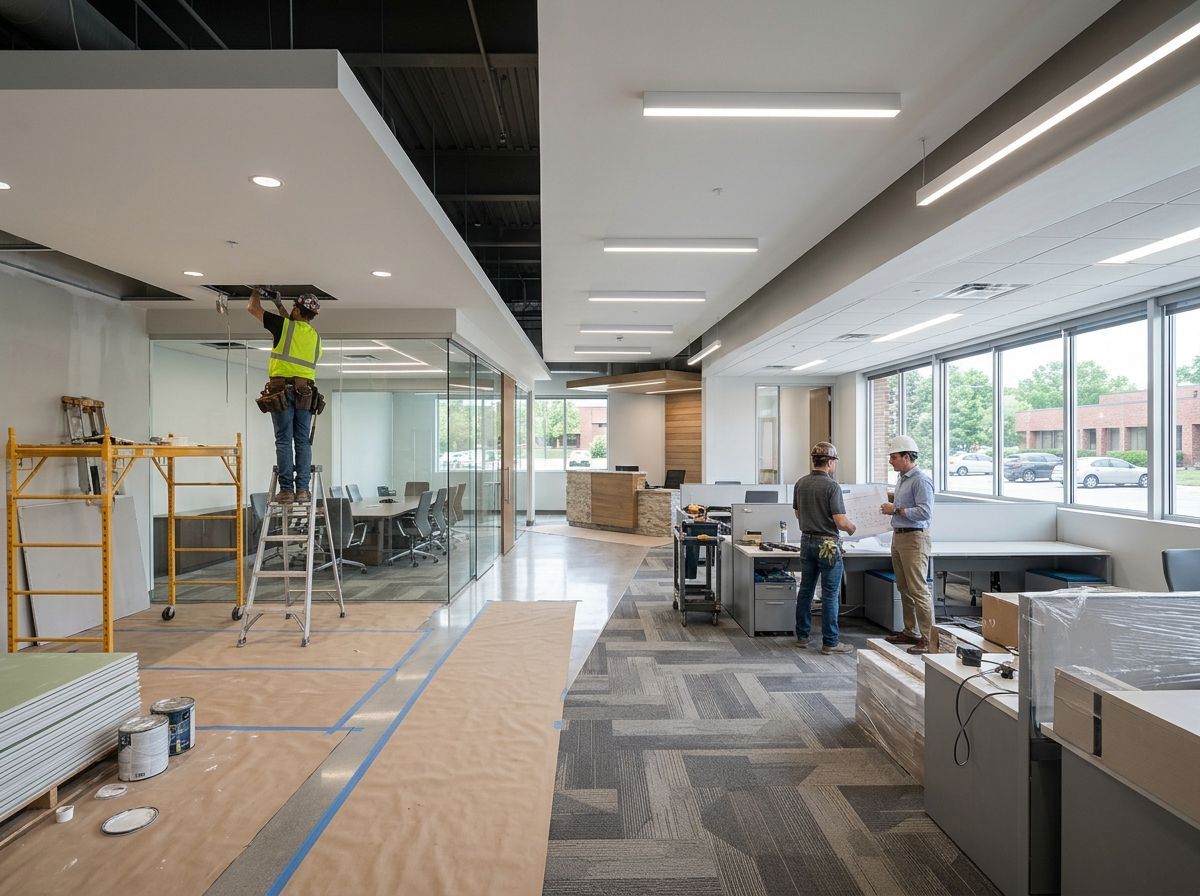
For example, replacing worn flooring while updating wall finishes can make an older office unit feel more modern and welcoming.
Property owners considering Commercial interior finishing services Omaha should evaluate how different improvements will work together.
Other related improvements may include:
- Commercial drywall repairs.
- Interior painting.
- Ceiling improvements.
- Wall finish updates.
- Interior layout modifications.
- Flooring replacement.
- Tenant space preparation.
Working with a qualified commercial flooring and interior finish contractor Omaha NE can help coordinate the overall renovation process.
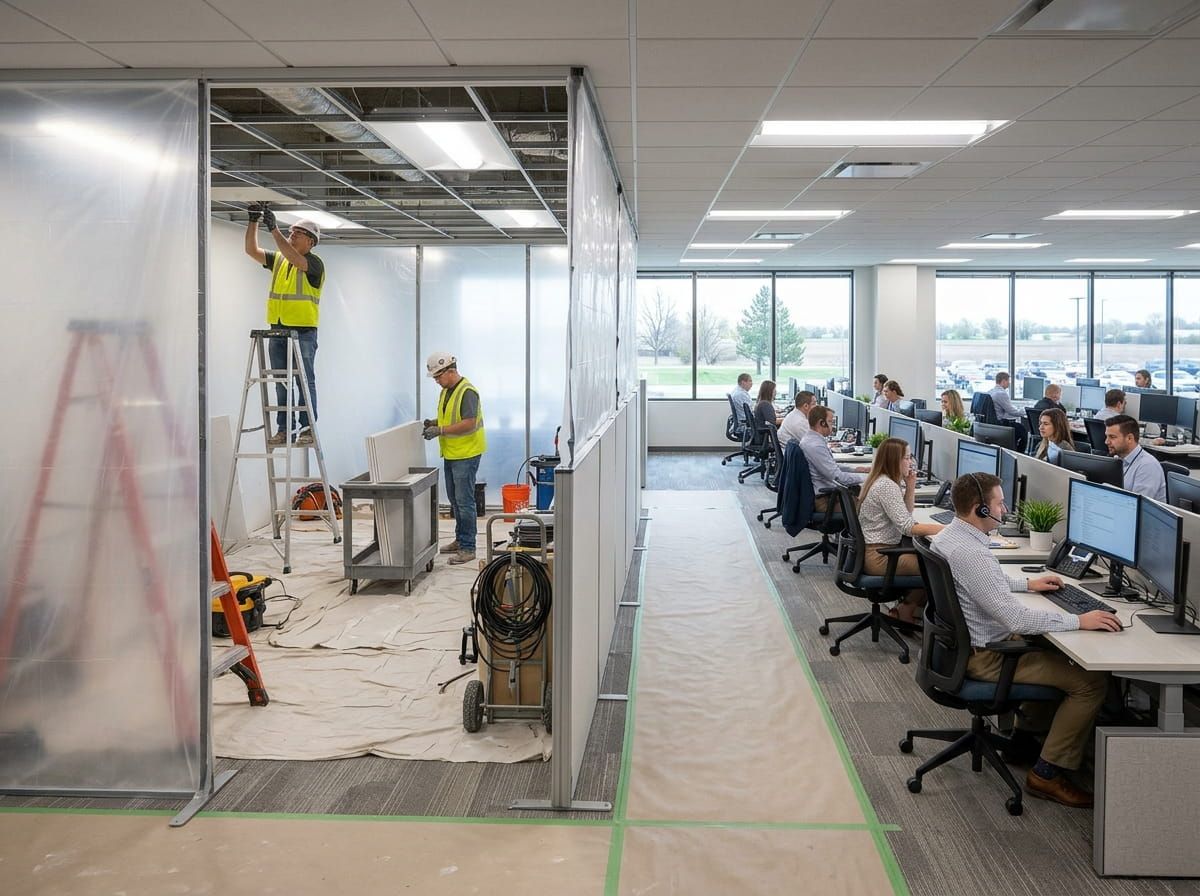
9. Understand Installation Scheduling in Occupied Buildings
Multi-tenant buildings are often occupied while renovation work takes place. This creates additional challenges because tenants may need uninterrupted access to their offices or business units.
A flooring project should be planned around building operations whenever possible.
Property managers should discuss:
Work Zones: Identify which areas will be unavailable during installation.
Tenant Communication: Notify occupants about schedules, temporary access changes, and expected disruptions.
Material Delivery: Coordinate deliveries to avoid blocking entrances and common corridors.
Noise and Dust: Establish appropriate measures to manage construction-related disturbances.
Installation Sequence: Divide larger projects into manageable sections when practical.
An experienced commercial flooring and interior finish contractor Omaha NE can help develop a project schedule that considers building occupancy and tenant activities.
10. Review Safety, Accessibility, and Building Requirements
Commercial flooring should support a safe and accessible environment.
Property owners should consider applicable building codes, accessibility requirements, and the intended use of each space.
Important factors include:
- Appropriate slip resistance.
- Smooth transitions between different flooring materials.
- Accessible routes and entrances.
- Suitable floor surfaces for mobility devices.
- Proper installation around stairs and thresholds.
- Appropriate performance for wet or high-traffic environments.
The Americans with Disabilities Act (ADA) provides accessibility standards that may affect flooring transitions, walking surfaces, and accessible routes.
Property owners should confirm applicable requirements with qualified professionals before starting construction.
11. Evaluate the Total Project Scope Before Making a Decision
A flooring project should be evaluated as part of the building's broader improvement plan.
For example, an older commercial property may require floor replacement alongside drywall repairs, painting, and preparation for incoming tenants.
Choosing materials before understanding the complete project can lead to scheduling problems and unnecessary rework.
A professional Commercial renovation contractor Omaha NE can help property owners assess the overall condition of the interior and identify which improvements should be coordinated.
This is particularly useful when planning:
- Individual tenant space renovations.
- Common-area improvements.
- Office modernization.
- Retail unit preparation.
- Interior finish upgrades.
- Building-wide flooring replacement.
Property owners can also explore Commercial floor replacement Omaha when existing surfaces are damaged, outdated, or no longer suitable for the building's daily use.
12. Choose a Contractor Who Understands Commercial Interior Projects
Selecting the right materials is important, but proper planning and installation also play a major role in the final result.
Commercial projects often involve several connected tasks, including surface preparation, flooring installation, drywall repairs, painting, and tenant improvement work.
When evaluating a contractor, consider their ability to understand project requirements, coordinate different interior improvements, and communicate with property owners.
A qualified Commercial flooring contractor Nebraska should understand the importance of material suitability, installation preparation, building functionality, and long-term performance.
Property owners planning larger improvements may also benefit from working with a Commercial tenant improvement contractor Omaha who can help coordinate changes required to prepare individual spaces for new or existing tenants.
How Just Right Construction Can Help With Commercial Interior Improvements in Omaha
Commercial buildings need interior spaces that are functional, presentable, and suitable for the businesses operating inside them.
From flooring considerations to broader interior renovation planning, property owners should evaluate how every improvement contributes to the building's usability and appearance.
Just Right Construction provides construction and commercial improvement services for property owners looking to improve and maintain their spaces in Omaha and surrounding communities.
Whether you are preparing a commercial unit for a new tenant, updating an existing office, or planning improvements across a multi-tenant property, having a clear project plan can make the process more manageable.
If you are searching for a commercial flooring and interior finish contractor Omaha NE, consider discussing your building's requirements with Just Right Construction.
The company can help you explore commercial improvement needs, including flooring-related upgrades, interior finishing, and renovation planning.
Business Name: Just Right Construction
Phone Number: +1 402-671-3094
Address: N/A
Website: justrightconstructioninc.com
Contact Just Right Construction at +1 402-671-3094 to discuss your commercial construction and interior improvement requirements in Omaha, Nebraska.
Frequently Asked Questions About Commercial Flooring for Multi-Tenant Buildings in Omaha
1. What Is the Best Flooring for a Multi-Tenant Commercial Building?
The best flooring depends on how each area will be used. Luxury vinyl may work well in offices and retail spaces, carpet tiles can provide comfort and sound absorption, and porcelain tile may be suitable for selected entrances and common areas.
2. Should Every Tenant Space Have the Same Flooring?
Not necessarily. Different businesses have different operational requirements. Property owners can maintain a consistent building appearance while selecting suitable flooring materials for individual tenant spaces.
3. How Does Omaha Weather Affect Commercial Flooring Choices?
Snow, rain, mud, and melting ice can introduce moisture and dirt into commercial buildings. Property managers should consider moisture resistance, slip resistance, entrance protection, and cleaning requirements.
4. How Do I Know When Commercial Flooring Needs Replacement?
Visible cracks, persistent stains, loose materials, damaged sections, uneven surfaces, and recurring maintenance problems may indicate that replacement should be considered.
5. Is Luxury Vinyl Flooring Suitable for Commercial Offices?
Yes. Commercial-grade luxury vinyl can be suitable for many office environments because it offers different designs, relatively easy maintenance, and practical performance. The selected product should match the expected traffic and installation conditions.
6. Why Is Subfloor Preparation Important Before Commercial Flooring Installation?
Proper preparation helps create a suitable surface for the new flooring. It can reduce installation problems related to unevenness, moisture, poor adhesion, and premature material deterioration.
7. Can Commercial Flooring Be Replaced While Tenants Are Still Working?
Yes, depending on the project size and building conditions. Contractors may divide the work into sections, schedule installation outside business hours, and coordinate temporary access arrangements.
8. What Should Property Managers Consider When Choosing Office Flooring in Omaha?
Property managers should evaluate foot traffic, sound control, cleaning requirements, furniture movement, appearance, durability, and accessibility before selecting office flooring.
9. Should Flooring and Interior Painting Be Completed Together?
Coordinating these improvements can help create a consistent finished appearance and reduce the need for repeated preparation. The installation sequence should be planned according to the materials and project requirements.
10. Why Hire a Commercial Flooring and Interior Finish Contractor in Omaha NE?
A knowledgeable contractor can help assess building conditions, evaluate flooring options, coordinate interior improvements, and plan installation around tenant operations.
11. What Other Improvements Can Be Completed Alongside Commercial Flooring?
Depending on the building's condition, property owners may consider drywall repairs, interior painting, ceiling updates, layout modifications, and other commercial interior improvements.
12. How Can I Discuss a Commercial Interior Improvement Project With Just Right Construction?
You can contact Just Right Construction at +1 402-671-3094 to discuss your commercial construction and interior improvement requirements in Omaha, Nebraska.
Final Thoughts
Choosing flooring for a multi-tenant commercial building requires careful consideration of durability, tenant activities, maintenance, safety, weather exposure, and installation requirements.
Rather than selecting one material based only on appearance, property owners should evaluate the purpose of each space and choose surfaces that support its daily use.
A coordinated approach to flooring and interior improvements can help create a more functional, attractive, and manageable commercial property.
If you are planning a commercial renovation, office upgrade, or tenant improvement project, Just Right Construction can be a point of contact for discussing your construction and interior improvement needs in Omaha.